Explore the diverse world of biodegradable cutlery materials designed to provide sustainable alternatives to traditional plastics. Each type offers unique benefits, promoting environmental health while maintaining functionality.
Key Takeaways
- Biodegradable cutlery is made from eco-friendly materials like PLA, bamboo, and bagasse.
- It reduces plastic waste and carbon footprints.
- Many options are compostable, contributing to soil health.
- Choosing biodegradable cutlery supports sustainable practices for businesses and consumers alike.
Biodegradable cutlery is available in several eco-friendly materials, each with distinct properties and benefits. Here’s a breakdown of the most common types:
PLA (Polylactic Acid) is derived from renewable resources like corn starch and mimics the look and functionality of traditional plastic. It is compostable in industrial facilities under specific conditions.
CPLA (Crystallized Polylactic Acid) is a modified version of PLA with increased heat resistance, making it ideal for serving hot foods and beverages. Like PLA, it is fully compostable in industrial composting environments.
Bamboo is sourced from the rapidly renewable bamboo plant, which is naturally strong and biodegradable. It does not impart flavors to food, making it suitable for a wide range of dishes.
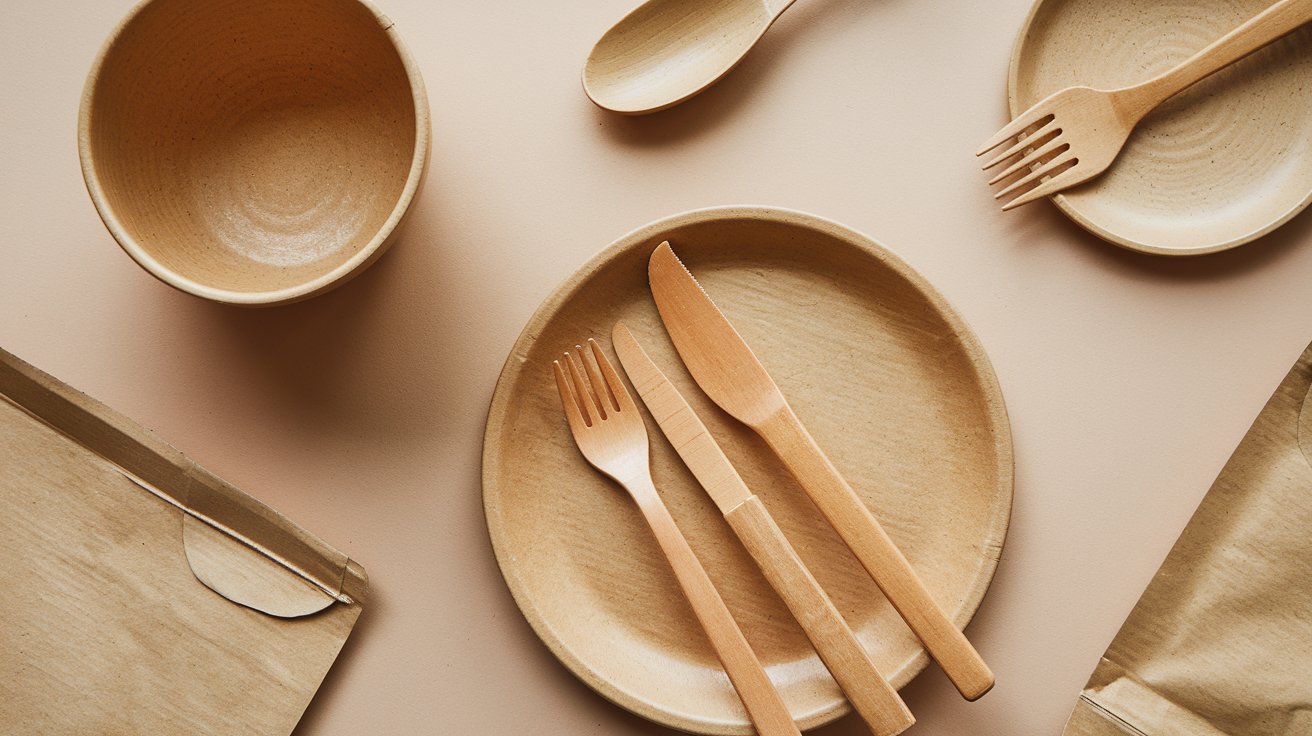
Image from
Ideogram
Bagasse is composed of the fibrous residue left after sugarcane juice extraction. It is sturdy, microwave-safe, and ideal for both hot and cold foods, breaking down fully and faster than conventional plastics.
Corn Starch cutlery is made from extracted corn starch, providing an eco-friendly alternative that is both biodegradable and compostable, contributing to a reduced environmental impact while functioning effectively as single-use utensils.
Palm Leaf cutlery is crafted from naturally shed areca palm leaves, offering a rustic, unique appearance. It is strong and lightweight, capable of holding various types of food without compromising integrity, and is home-compostable within two to three months.
Stainless Steel Coating (Reusable) refers to coated disposable cutlery made from stainless steel, ensuring exceptional durability and strength. This option can be reused up to 100 times, serving as an eco-friendly alternative to single-use products, and is both sustainable and recyclable.
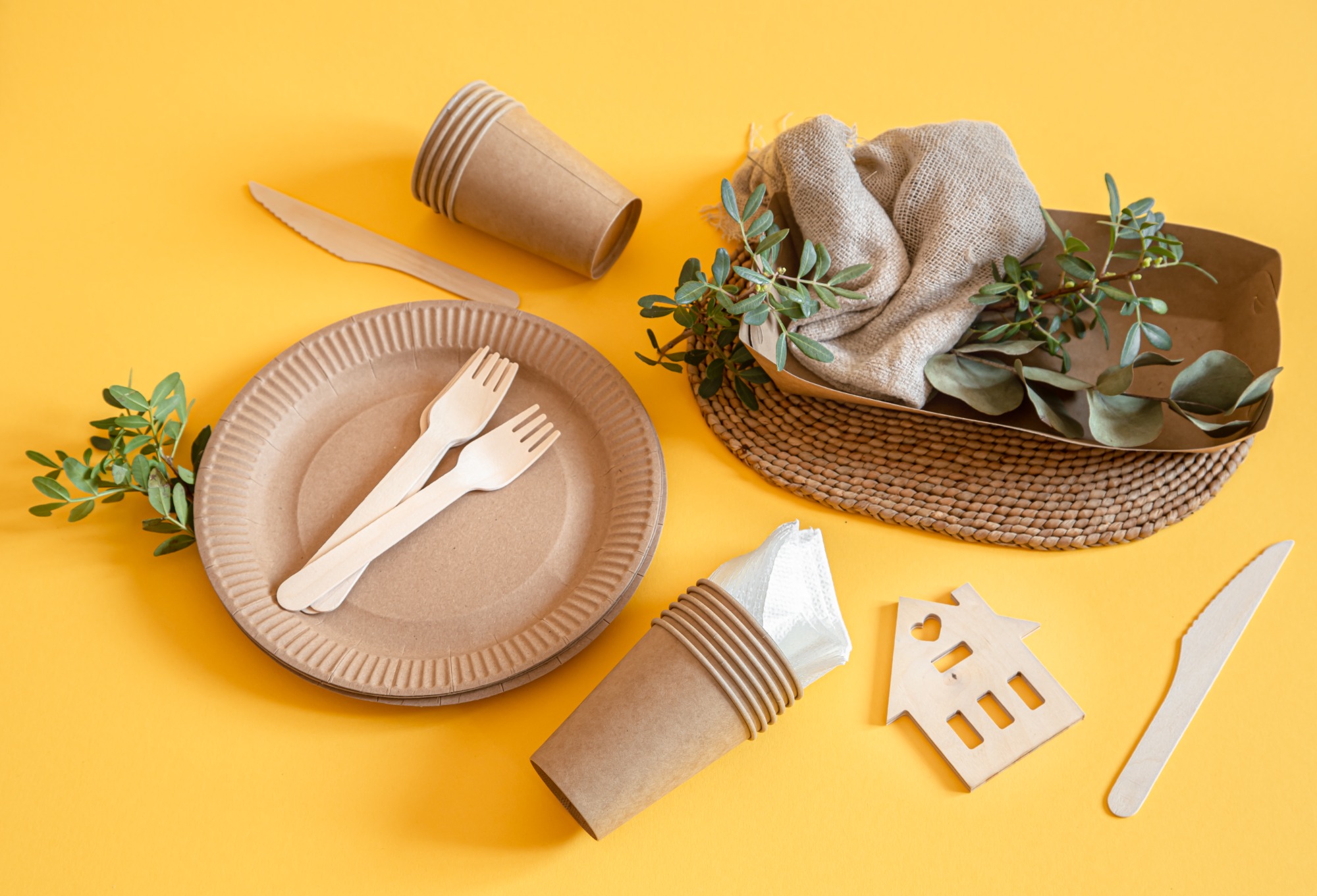
Image by
pvproductions from Freepik
Paper cutlery, while primarily used for other disposable items, can be uncoated and compostable. This option is lightweight and biodegradable but may lack durability for certain applications. Choosing recycled paper products enhances eco-friendliness and helps reduce waste.
These biodegradable materials provide sustainable options for disposable cutlery, helping to reduce environmental harm associated with traditional plastic utensils.
Biodegradable cutlery offers a range of advantages that make it a superior alternative to traditional plastic utensils. First and foremost, it is
environmentally friendly, designed to break down quickly in composting conditions, which helps combat the pressing issue of plastic pollution. Unlike plastic, which can linger in landfills for centuries, biodegradable options decompose into harmless organic compounds, thereby reducing waste and protecting wildlife. Additionally, these utensils are typically made from renewable resources such as cornstarch, bamboo, and sugarcane, allowing for sustainable harvesting without depleting finite materials.
Another significant benefit is the
reduced carbon footprint associated with their production. Biodegradable cutlery often requires less energy to manufacture, resulting in lower greenhouse gas emissions. This eco-friendly manufacturing process not only lessens environmental impact but also aligns with a broader commitment to combat climate change.
Furthermore, the absence of harmful chemicals like BPA ensures that these utensils are safe for food consumption, providing peace of mind for consumers.
Ultimately,
transitioning to biodegradable cutlery represents a smart, cost-effective choice for businesses looking to meet consumer demand for sustainable products while adhering to increasingly stringent regulations on single-use plastics. By adopting biodegradable solutions, businesses can not only contribute to environmental sustainability but also enhance their market appeal and long-term viability.
Selecting the right biodegradable cutlery manufacturer involves several key considerations to ensure quality, reliability, and sustainability.
Begin by verifying the manufacturer's certifications, such as those from the Biodegradable Products Institute (BPI) or the European Bioplastics Association (EUBP). These certifications indicate that the cutlery will decompose effectively in composting facilities. Additionally, check for FDA approval to confirm that products meet safety standards and look for ISO 9001 certification, which reflects a commitment to quality management.
Assess the manufacturer's production capabilities and technology to ensure they can deliver high-quality products consistently. Inquire about bulk order options and their ability to handle large quantities efficiently. Lead times and delivery schedules are also crucial—ensure they can meet your timelines to avoid disruptions in your supply chain.
Evaluate the pricing structure by comparing unit costs with other manufacturers while considering shipping fees and any customization charges. Look for potential discounts for bulk purchases or long-term partnerships. By analyzing these factors, you can find a cost-effective manufacturer that aligns with your budget without compromising on quality or sustainability.
Biodegradable cutlery is better for the environment because it decomposes naturally, reducing plastic waste in landfills and oceans. Unlike traditional plastic utensils, which can take hundreds of years to break down, biodegradable options typically break down into harmless organic compounds within months.
Yes, many types of biodegradable cutlery are compostable. When disposed of properly in composting facilities, they break down into organic matter that enriches the soil, supporting plant growth and contributing to a healthier ecosystem.
Biodegradable cutlery typically requires less energy to produce compared to traditional plastic cutlery, resulting in lower greenhouse gas emissions. The use of renewable materials further contributes to a reduced carbon footprint throughout its lifecycle.
Yes, certain types of biodegradable cutlery, such as CPLA, are specifically designed to withstand heat, making them suitable for serving hot foods and beverages without compromising their integrity.
The shelf life of biodegradable cutlery varies by material, but it generally lasts as long as traditional plastic cutlery when stored properly. However, once exposed to composting conditions, they will start to break down within months.
Biodegradable cutlery is typically free from harmful chemicals like BPA and phthalates, making it a safer choice for food consumption. It does not leach toxic substances into food, ensuring a healthier dining experience.
The growing demand for sustainable alternatives has made biodegradable cutlery an essential choice for environmentally conscious consumers and businesses alike. With materials like PLA, bamboo, and bagasse offering distinct advantages, biodegradable options help mitigate plastic pollution while providing safe and effective dining solutions. Luzhou Pack’s biodegradable bagasse cutlery stands out for its durability and eco-friendliness, making it a perfect choice for those looking to make a positive environmental impact without compromising on quality.
Explore Luzhou Pack's collection of 100% compostable cutlery and join the movement toward a greener future.


